In short: Restaurant website design runs on a different order of priority than a corporate site. The menu, a booking option and current opening hours have to be visible within seconds, alongside real food photography instead of stock images. Six pages usually cover it. At Okapi Digital in Frankfurt, a site like that starts at €999 and goes live in 5 to 10 days; the version with online booking, an events page and full on-page SEO is €3,490 and takes 3 to 4 weeks. The piece with the fastest payoff costs the least: a maintained Google Business Profile with current photos.
Here's how it plays out most Friday nights. Someone is standing downtown, hungry, and types "restaurant open now near me" into their phone. The first three results open, and the booking goes to the one that shows what's on the plate, whether a table is free right now, and how to reserve it. The other two lose the guest in under a minute, without ever showing the menu.
The gap between a website that exists and one that fills tables rarely comes down to design. It comes down to four things that have to be visible on a phone immediately.
Why Does a Restaurant Need a Different Website Than an Office Business?
A B2B company site accompanies a long decision. Someone reads, compares, discusses it internally, and gets in touch days later. A website for a restaurant works on a different clock: the visit it leads to is often spontaneous, decided under time pressure, on a phone. Four requirements follow from that:
- The menu is one click away from the home page, not hidden behind a download.
- Current opening hours sit at the top, including holidays and closed days. Nothing loses a guest faster than an outdated hour.
- Booking is a button, not a paragraph of text. Whether by phone, form or booking tool, the path to it is never more than one tap.
- Photos show real food from the actual kitchen, not a stock library. Guests spot stock photography instantly, and it works against the restaurant, not for it.
Every restaurant also sells differently. For a café it's location and how the coffee photographs, for a fine-dining spot it's atmosphere and whether a table is available tonight, for a pizzeria it's price and delivery time, for an event venue it's capacity for private parties. One site built the same way for all four leaves guests on the table in every case.
Restaurant Website Design: Which Pages Do You Actually Need?
Most restaurants don't need fifteen subpages. They need six that do their job.
Page 1, the home page. A photo that makes people hungry up top, then the name, location and current opening hours. Right below that, a booking button and a link to the menu. Everything else belongs on a subpage.
Page 2, the menu. On a restaurant menu website, this is the most-clicked page: dishes with price, a short description, and a photo where it earns its place. Allergen information and vegan or vegetarian labelling belong here too, since people actively search for them.
Page 3, booking. A form or an embedded booking tool with date, time, party size and a notes field for allergies or occasions. Reduce this step to a bare phone number and you lose every guest who's browsing outside your opening hours.
The Pages That Convince Guests
Page 4, about. Kitchen style, team, the restaurant's story, a photo of the dining room. This is where guests judge whether the atmosphere fits their occasion, before they even call.
Page 5, events and private parties. Corporate dinners, birthdays, private groups: a dedicated page with capacity, sample menus and a separate inquiry form captures requests that otherwise get lost in a general email. These tend to be the highest-value bookings a restaurant takes.
Page 6, contact and directions. Address, an embedded Google Maps view, parking notes and transit links. Someone searching downtown wants to know how to get there in seconds.
Add imprint and privacy pages where required. In Germany both are mandatory and get skipped or copied from an old site surprisingly often.
What Does a Restaurant Homepage Cost and How Long Does It Take?
Search for restaurant website cost and you'll get ranges from zero to twenty thousand euros, which helps nobody. So here are our actual restaurant homepage design prices, the same ones we quote on a call.
| Package | Price | Timeline | Fits |
|---|---|---|---|
| Launchpad | from €999 | 5–10 days | 1–3 pages, menu, location, first proper site |
| Ascent | from €3,490 | 3–4 weeks | 4–6 pages, online booking, events page, full on-page SEO |
| Apex | from €8,490 | 6–8 weeks | 10+ pages, multiple locations, catering section |
| Local SEO setup | €590 one time | 1 week | Visibility for "restaurant [city]" searches |
| Google Business Profile setup | €290 one time | a few days | Maps, photos, reviews |
| Missed call text back | €290 setup + €79/month | a few days | Booking calls that get lost at peak hours |
| Essential care plan | €49/month | ongoing | Hosting, backups, security updates |
Three things move the price: whether you need online booking with table management or a simple form is enough, whether usable dish photography already exists, and whether the menu changes often enough to need an easy content-management setup. Every package and what's in it is on our website development page.
How Important Is the Google Business Profile for a Restaurant?
Very, and often more so than the home page itself. A large share of searches for restaurants end in the map view, not on a website: "restaurant near me," "open now," "restaurant downtown." Category, current hours, food photos and reviews decide who gets called or walks in from there.
What belongs in it and in what order to tackle it is in our Google Business Profile checklist. Three points do most of the work for restaurants: the right primary category instead of a generic one, a steady stream of new photos of the current menu, and hours updated the moment a holiday changes them.
Reviews are the second lever. Restaurants run on word of mouth, and Google reviews are that recommendation made visible. An automated system that sends a review request after every booking costs €340 setup and €99 per month with us.
Why Do Food Photos Decide the Website?
Because a restaurant website without real photography proves nothing. Stock photos do the opposite of what they're meant to: a perfectly lit burger from an image library tells the guest there's nothing worth showing from the actual kitchen.
Use your own shots instead:
- Dishes in natural light, photographed at the pass, not staged after the fact.
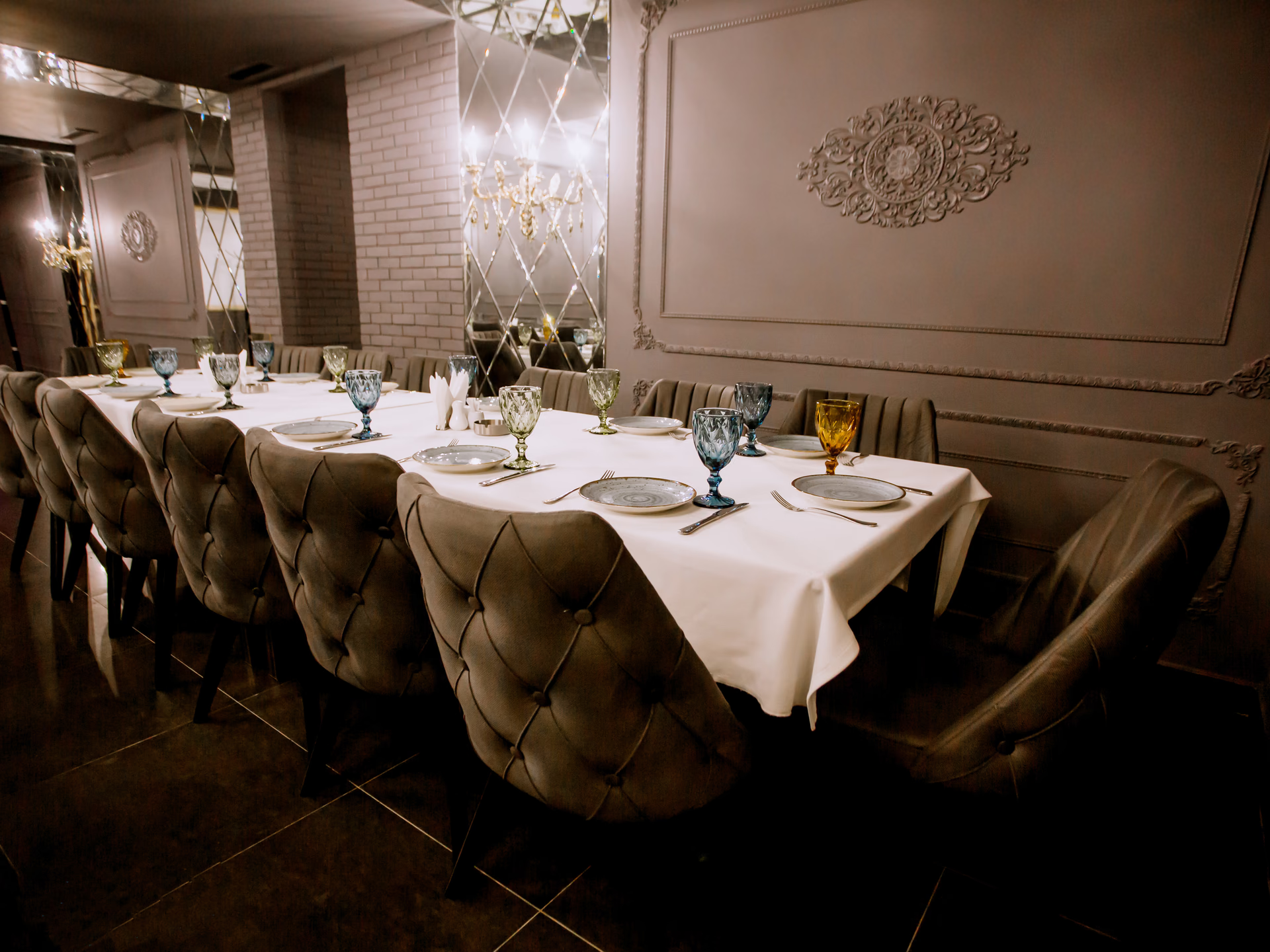
- The dining room in daylight and in the evening, so guests can judge the atmosphere for their occasion.
- The team at work. That doubles as material for the about page.
If the site also needs to win larger private events, a professional photo day is worth it; ours start at €720. For restaurants that want to sell groups and private parties specifically, a virtual 360° tour is a step further: guests walk the room digitally beforehand, embedded directly in Google Maps and the website. Details are on our VR tours page.
How Do You Fill Tables When Nobody Can Answer the Phone?
This is the biggest gap in restaurant marketing, and it has nothing to do with design. Friday night, the kitchen is at full speed, the phone rings, and nobody has a free hand. The caller hangs up and tries the next restaurant.
Two things close that gap. First, online booking that takes reservations around the clock, even outside opening hours. Second, an automatic fallback for the phone: missed call text back sends every missed caller an instant SMS with a short reply and a booking link, from €290 setup plus €79 per month. How it works in detail is in our piece on missed calls.
A WhatsApp button helps guests who'd rather text than call, and a chatbot that pre-qualifies booking requests outside opening hours starts at €490 setup plus €149 per month.
Conclusion
A restaurant website is judged on whether a table gets booked tonight. A menu, a booking button, current opening hours, real food photography and a maintained Google profile cover that. It isn't a big project either: from €999 in 5 to 10 days, or €3,490 in 3 to 4 weeks once online booking and an events page come in.
If you want to know which version is enough for your restaurant, we'll look at your current site and your Google profile together. Book a free discovery call and you'll get a concrete recommendation with a price and a timeline, even if you end up going elsewhere.