In short: A virtual tour for gyms shows the training floor, free-weights area, studio rooms and reception as a walkable 360 experience, before a prospect signs a long membership contract. That cuts hesitation before sign-up and builds visibility on Google Maps at the same time. Okapi Digital, based in Frankfurt, handles capture, stitching and publishing starting at €490 per location.
A gym membership usually locks a member in for many months, longer than almost any other local service contract. That's exactly why the uncertainty before signing up weighs so heavily: how crowded does the training floor really get after work? What do the studio rooms look like? Is the equipment as modern as the website photos suggest? A virtual tour for gyms answers those questions before the first visit even happens.
What does a virtual tour actually do for a gym?
Three effects matter more for gyms than for services people can cancel on short notice:
- Less hesitation before signing up. Seeing the training floor, equipment and studio rooms beforehand means prospects don't have to rely on marketing photos alone for a long-term commitment.
- More trial session requests. A tour on the website and Google Business Profile convinces prospects to actually book a trial session instead of keeping on searching.
- Longer time on Google Maps. Visitors who click through a tour stay on the profile longer, a signal Google weighs for local searches like "gym near me."
For gyms with heavy competition nearby, a fourth effect kicks in: a tour shows differences a price comparison alone can't capture, like equipment density during peak hours or the actual size of the free-weights area.
Which parts of a gym need their own tour?
A gym differs from many other industries in how many functionally different zones a prospect wants to see before signing up.
| Area | Why it belongs in the tour |
|---|---|
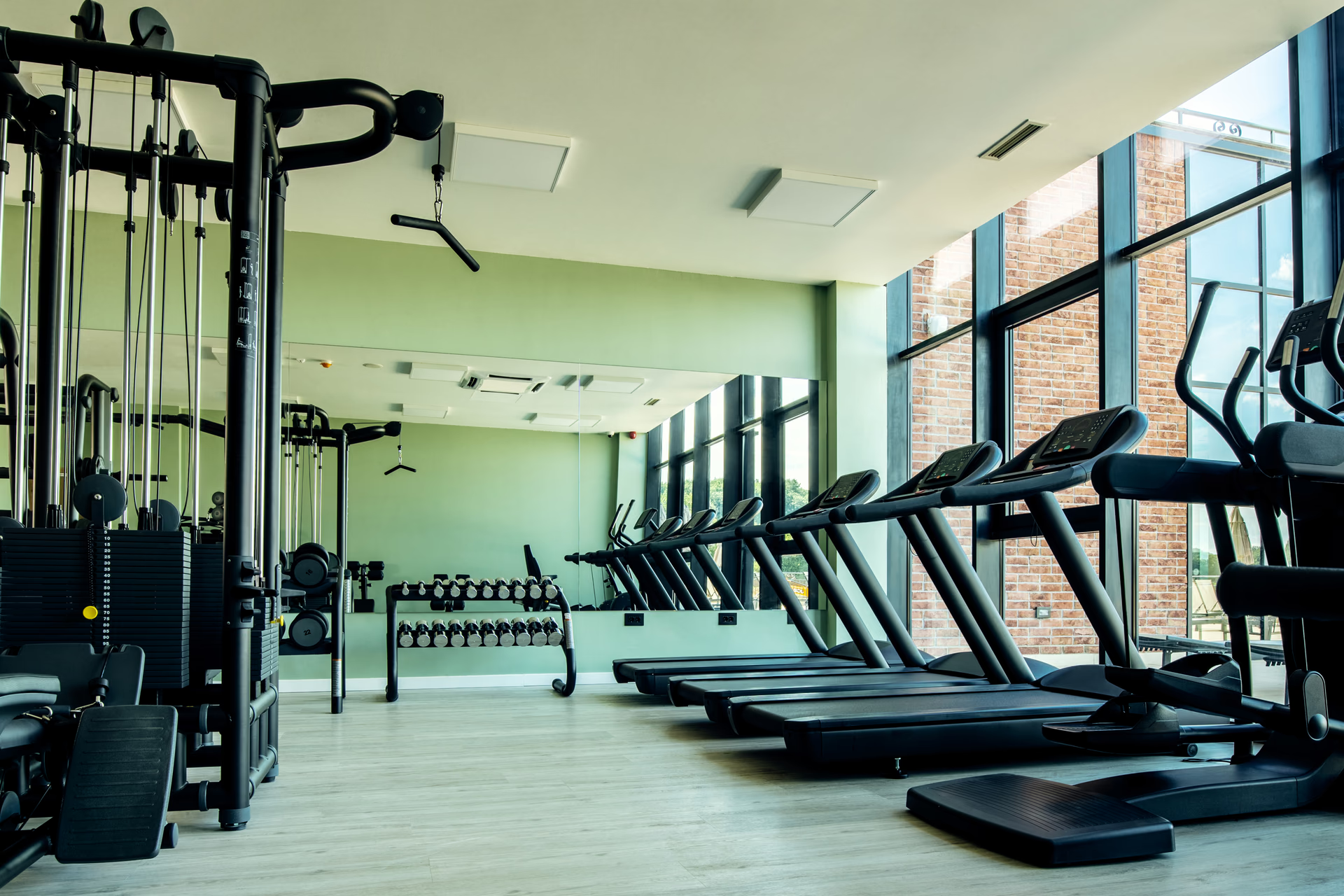
| Training floor & strength equipment | Shows equipment density and quality, the single biggest factor in the decision |
| Free-weights area | The deciding factor for many members, often shot separately from the main floor |
| Studio rooms | Matters more for gyms offering group fitness or yoga classes |
| Reception & lounge | First impression, often the deciding factor when equipment is comparable |
| Sauna & wellness area | Decisive for gyms with a premium membership tier |
| Outdoor area & parking | Location, parking situation and outdoor space for gyms with their own grounds |
Not every gym needs all six. A compact gym without classes skips the studio rooms; a premium gym with a wellness area adds it instead. Changing rooms and showers are usually left out entirely, partly for privacy reasons.
How does the shoot work at a gym?
The technical process matches the general approach we cover in detail in How to Create a Virtual Tour: shoot panoramas, stitch them, link the navigation, publish. A gym adds one extra layer of planning, because the result covers several functionally different zones.
- Define the areas. Before the shoot, decide which training zones, studio rooms and shared spaces each get their own tour, and which get left out on purpose.
- Prepare the gym. Tidy the equipment, clear away towels and personal items, turn on the lights. Whatever shows up in the panorama stays visible indefinitely.
- Shoot each area. The training floor, free-weights area, studio rooms and reception get captured separately, usually outside peak hours, so no members end up in the shot.
- Stitch and link. The individual areas are linked to each other, so prospects can move from reception straight into the training floor or a studio room.
- Publish. The finished tour gets embedded on your own website and linked to your Google Business Profile through the certified interface.
What does a virtual tour for gyms cost?
A virtual tour for gyms starts at Okapi Digital from €490 per location, one-time, covering capture, stitching and publishing. Optional hosting and maintenance adds €19 per month, cancel anytime. The exact price depends on how many areas need capturing: a compact gym with a training floor and reception sits at the lower end, a gym with several studio rooms, a sauna and an outdoor area costs more accordingly. A free discovery call clarifies the scope for your gym.
How does the tour become visible on Google Maps?
A DIY tour can be uploaded through the free Google Street View app, but it then appears without the Trusted badge and without the quality check a certified provider performs. A fully certified tour with Trusted status requires a Google-approved provider who links the capture directly to your Google Business Profile. We cover that exact difference in Google Street View Trusted Explained. For how a tour then affects local ranking in the map results, see 360° Tours on Google Maps.
How often should a gym tour be updated?
A tour loses its value the moment it stops showing what a prospect actually finds during a trial session. After buying new equipment, redesigning a studio room or changing the reception area, the affected zone should get reshot, not on a fixed yearly schedule. New strength equipment that isn't visible yet in the tour sets an expectation that no longer matches the first visit, and that kind of mismatch stands out far more in a walkable tour than in a single marketing photo.
Common mistakes when shooting a gym tour
A handful of mistakes show up repeatedly in gym tours, because several zones need managing at once:
- Shooting during peak hours. Members working out in the shot look unprofessional and raise privacy questions that a shoot scheduled outside peak hours avoids entirely.
- A cluttered training floor. Dumbbells, mats or towels left lying around stay visible in the panorama indefinitely, unlike a quickly retouched marketing photo.
- Missing links between zones. When reception doesn't link to the training floor or studio rooms, prospects have to hunt for each area themselves.
- Studio rooms with the lights off. Studio rooms shot without full lighting look noticeably smaller and less inviting on the panorama than they do in person.
- An outdated tour after an upgrade. Once new equipment arrives or an area gets redesigned, the old tour loses credibility and needs replacing.
Is a tour worth it for a small or newly opened gym?
Yes, often especially so. A newly opened gym has no reviews yet and no members sharing photos on social media. A tour fills exactly that gap: prospects see the freshly fitted-out training floor and the new equipment without waiting on someone else's experience. A small, independent gym also benefits from its tour appearing right next to the larger chains nearby on Google Maps, competing purely on what the space actually looks like, regardless of marketing budget or location count.
Gyms with several locations use the tour the other way around, to show each site individually. A prospect searching near their own neighborhood sees the actual training floor and studio rooms of the location they'd realistically visit, not a generic marketing shot that looks the same for every branch.
The bottom line
A virtual tour for gyms turns marketing photos into a walkable, credible preview, exactly at the point where prospects decide between your gym and the competition, often before committing to a long membership. Showing the training floor, free-weights area and studio rooms cuts hesitation before sign-up and wins extra visibility on Google Maps.
Want to know what a virtual tour would cost for your gym? Book a free discovery call. We'll scope the effort for your training zones and shared spaces. More on our offer on the 360° VR Tours page.